
Interlocking in Kitchener and Waterloo: a homeowner’s guide to driveways and patios
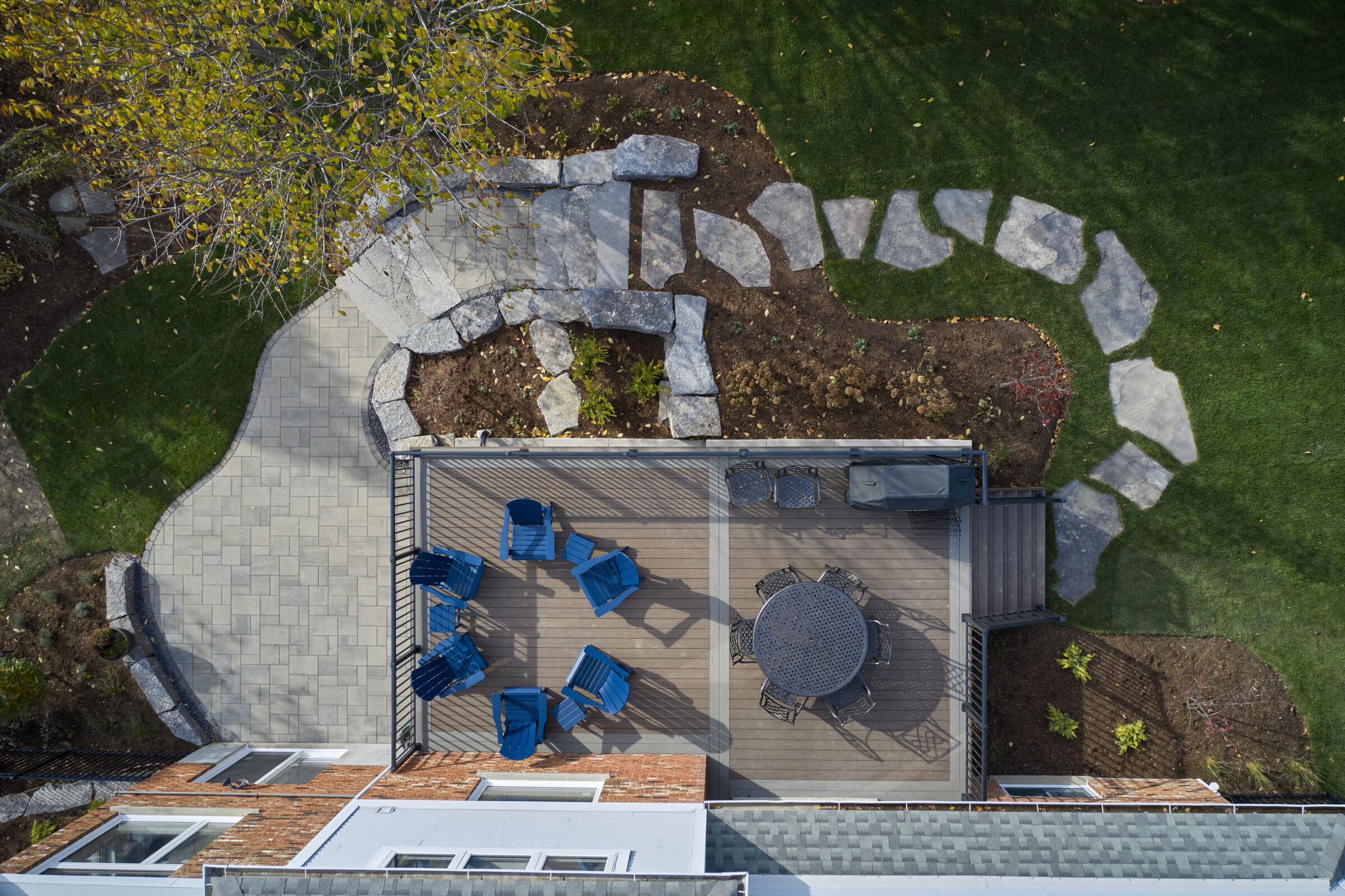
Overview
A driveway tells you when it’s time for a change. The asphalt crumbles at the edges. Water pools in the low spot by the garage. Each winter of freezing and thawing makes the cracks a little wider.
At some point, you notice a new driveway down the street. You start thinking about interlock for your own home. Like most homeowners, you already know the look you want. But you don’t know the terms used on a quote, and that page of line items can be confusing.
That gap in knowledge can cost you money. Here’s why: the part of an interlock job you can see matters the least. Two quotes can describe the same finished surface, but have very different builds underneath. And it’s what’s underneath that has to handle our ground and our winters. In southern Ontario, frost typically reaches a depth of about 1.2 meters. This depth changes from lot to lot and winter to winter. The soil here is silty, which means it’s easily damaged by frost. The clay drains slowly and gets weak when it stays wet. The city has rules too: widening a driveway in Kitchener requires a permit, and you must apply at least 15 business days ahead. Whatever you build must match the material already there.
We’ve built driveways and patios in Kitchener and Waterloo for more than 30 years. This overview covers what we’d tell you at the kitchen table, before we ever talk about price, so you know what you’re paying for.
Table of Contents
- What the terms on an interlock quote mean
- How Kitchener-Waterloo clay and frost change a build
- Driveways, patios and the four paver materials
- The stages of an interlock install
- City permit rules for driveways and patios
- The months you can lay interlock in Ontario
- How to tell interlock installers apart
What the terms on an interlock quote mean
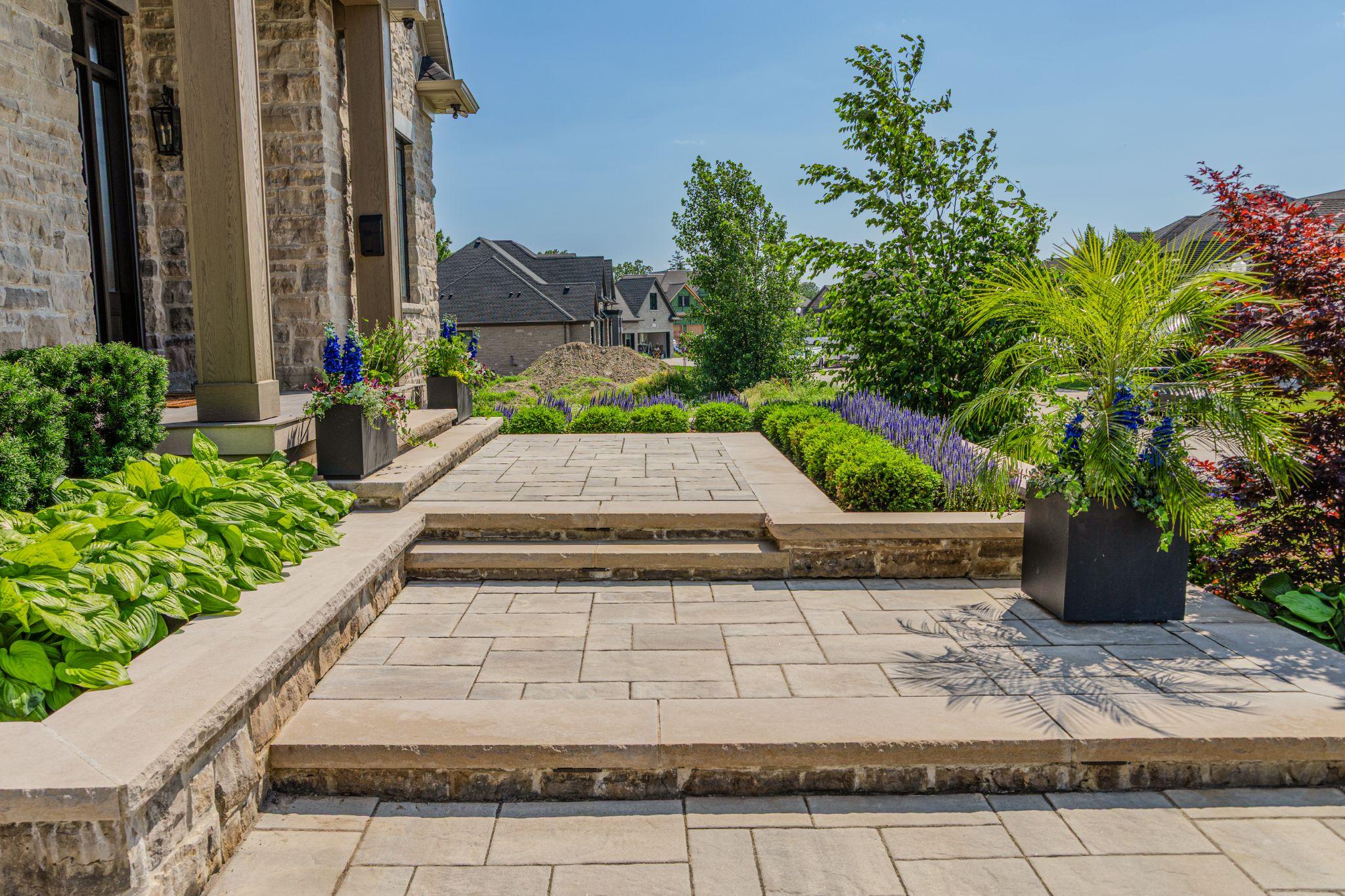
Interlock is built up from the ground. The pavers on top go in last. The industry calls this “segmental paving” and classifies it as a “flexible pavement.” This means the surface moves with the ground and spreads that movement across thousands of small joints, instead of staying rigid like a single slab of concrete.
Most people just call it interlocking stone, whether it’s made of concrete pavers, large slabs, or natural stone. But those units are only the top layer. Below them, a good quote should cover five parts.
- Subgrade. This is the natural ground on your lot, after the old surface, roots, and organic material are removed. Everything built above it depends on how good this layer is.
- Compacted base. This is crushed stone, placed and packed down in layers. It’s the structural layer. It carries the weight and spreads it across the subgrade.
- Bedding layer. This is a thin, leveled layer of aggregate. The pavers sit in this layer. It’s meant to hold the pavers in place, not to fix an uneven base.
- Jointing sand. This sand fills the gaps between the pavers. It’s often a polymeric sand. Full joints are what make separate pavers act like one solid surface.
- Edge restraint. This is a buried edge that keeps the outer rows of pavers from shifting outward. It’s a key part of the system, because it’s what holds the whole surface together.
If a quote doesn’t list these layers, you can’t fairly compare it to another quote. Two prices for “interlock driveway, supply and install” might not be for the same job at all.
There’s one more term to understand before you read any warranty. Industry standards state that some settling is normal for all flexible pavements like this one. That means the system is working as designed. It’s not a defect.
How Kitchener-Waterloo clay and frost change a build
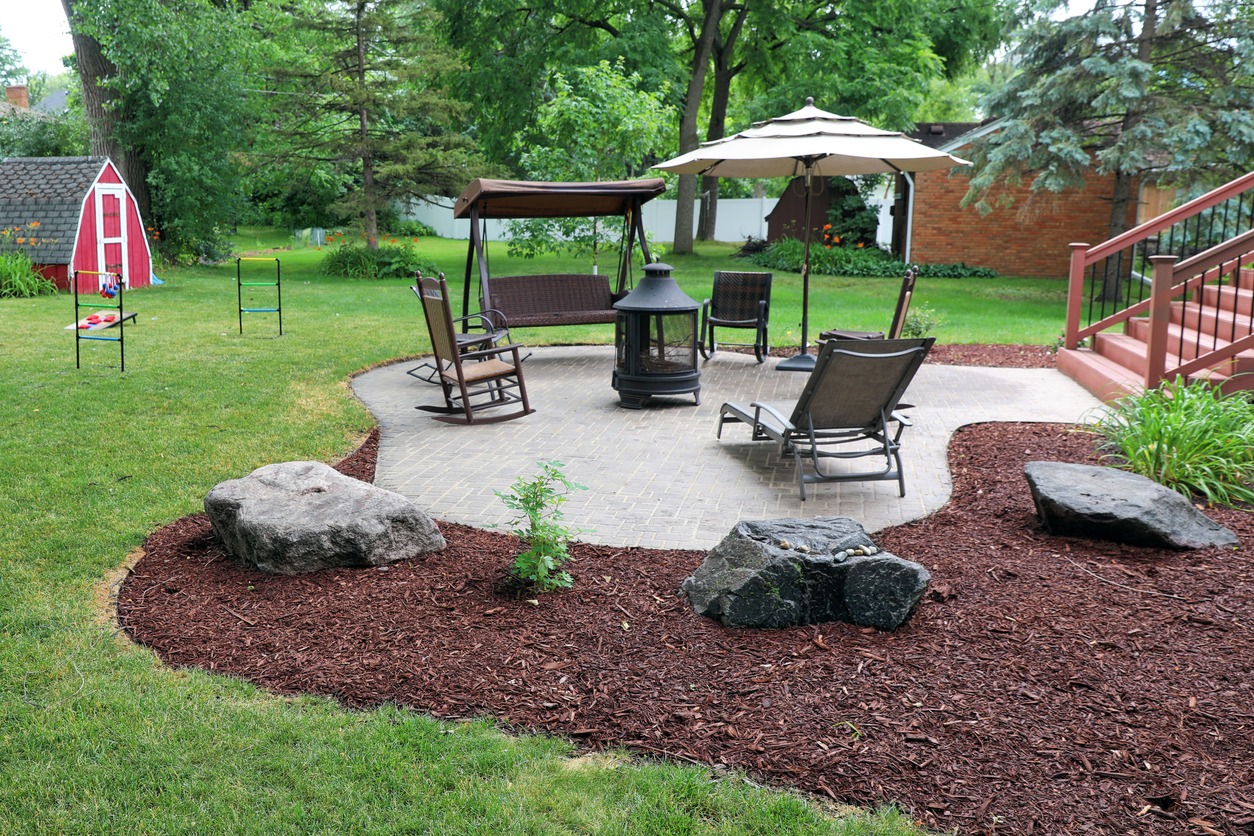
Two things about this region shape every build. Neither one is optional: how deep the frost goes, and what kind of soil is on your lot. A good build has to account for both.
Frost depth is the first fact, and it changes. In southern Ontario, frost typically reaches about 1.2 meters deep. This isn’t a fixed number you can look up for your address — it varies. Soil type is the second fact. Silt and fine sand are easily damaged by frost. Clay drains slowly, holds water, and gets weak when it’s wet. This describes a lot of the lots in Kitchener, Waterloo, Guelph, and Cambridge.
Industry standards are written for all of North America, and they adjust the build based on these two things. Well-drained soil needs a lighter build. Clay and wet, silty soil need a fabric layer called geotextile, especially where freezing and thawing happen — this fabric stops soil from working its way up into the base. Slow-draining soil under driveways also needs perimeter drains. So the same standard that allows a simple build on sandy soil asks for more work on the type of ground most of us actually have here.
Here’s how this plays out on our own jobs, and what separates one quote from another:
- We use a filter cloth or synthetic base layer on every job we build, no matter the soil type.
- We add perimeter drains wherever the lot needs them. This is a stricter rule than the industry minimum. Ask any installer where they draw this line.
- Poor soil means a heavier build. We make that call after a site visit.
Salt damage and freeze-thaw damage are handled by a standard called CSA A231.2, which is what certified concrete pavers are made to meet. This is why the pavers themselves rarely fail. When something fails, it usually starts underneath — in the base, or from water that had nowhere to drain.
Driveways, patios and the four paver materials

The surfaces you can pave
Interlock can cover most hard surfaces on a property. This includes driveways, front entrances and walkways, rear patios, steps, and the border edges around any of these. But these aren’t all built the same way. A patio holds people, furniture, and maybe a barbecue. A driveway holds two vehicles, and sometimes a delivery truck that parks somewhere it shouldn’t. Because of this, driveway pavers are thicker than walkway pavers, the base underneath is heavier, and the pattern is chosen to handle weight, not just to look good.
This difference matters more as a project gets bigger. If you build a patio and a driveway at the same time, they can use matching materials but still need different structure underneath. The same is true for steps and retaining walls — these need to hold back soil, not just support a surface.
The four material families
- Concrete pavers. These are the most common choice in this region, with the widest range of shapes, sizes, and colours. They meet a standard called CSA A231.2, which covers resistance to de-icing salt and freeze-thaw damage. They’re also the most consistent material to install.
- Clay brick. This is fired clay, available in fewer shapes and sizes. It has a traditional look that fits well with older homes in Kitchener and Guelph.
- Natural stone. This is stone that’s been quarried and cut, so no two pieces look exactly alike. The surface looks less uniform by design. This material benefits most from sealing, since its color is worth protecting.
- Porcelain. This is dense and very consistent in size, giving it a flat, modern look.
The look of each material is something you should judge for yourself in person. Our finished driveway and patio work lets you see how each material actually looks at full size, next to local brick, in real outdoor light.
No matter which material you pick, de-icing salt and similar products are what change the look of a hard surface over time.
Against poured concrete
Interlock costs more upfront than poured concrete, but it lasts longer. A paver surface has room to shift with the ground. A solid concrete slab does not — its only way to handle that movement is to crack.
The stages of an interlock install
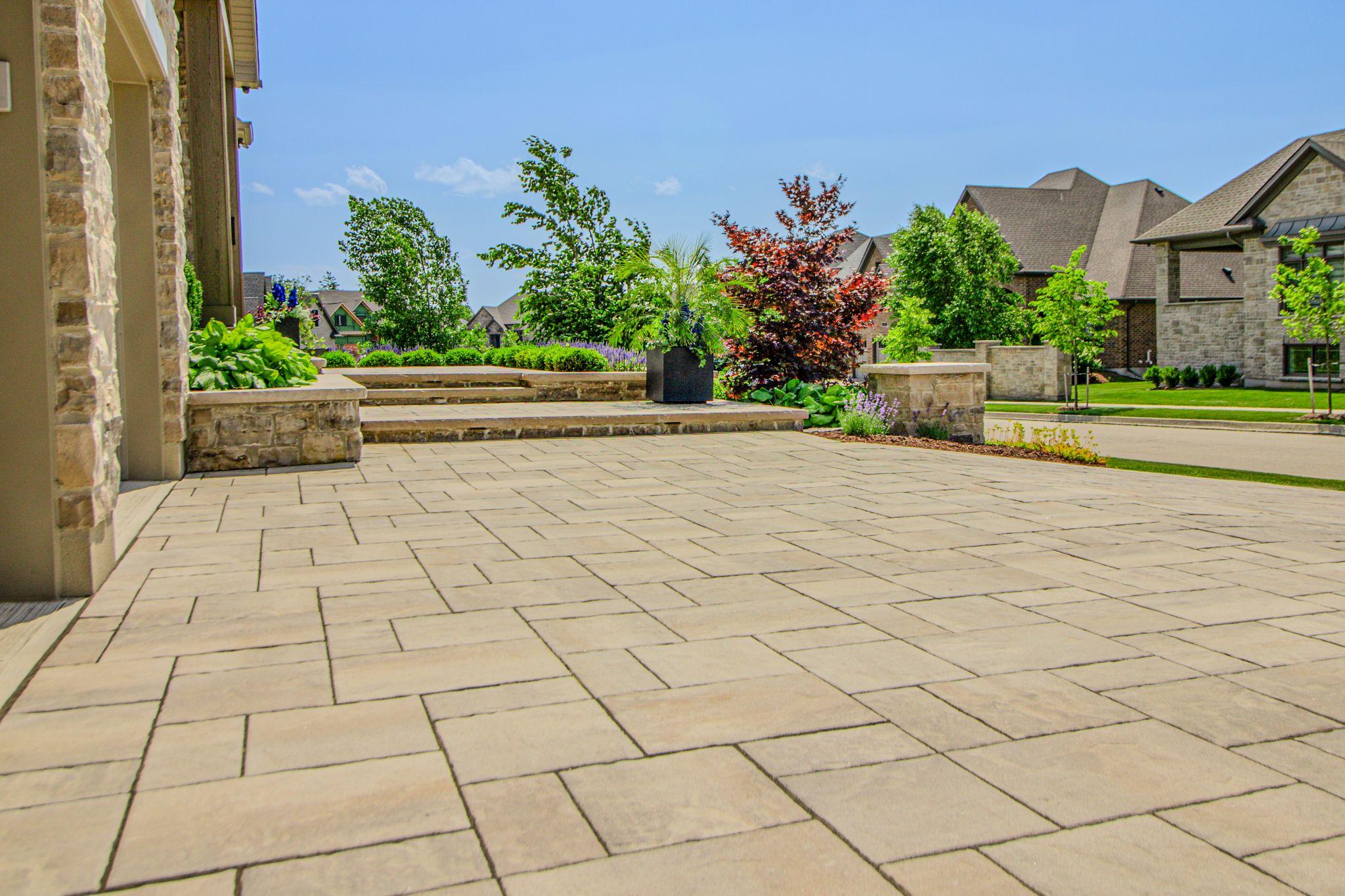
Once the plan is set, a residential job follows a fixed order. Knowing this order helps you tell if a given day of work is on track.
- Utility locates. Crews call this in before any digging starts, at least two days ahead.
- Layout. Workers mark the edges, elevations, slope, and water flow directly on the ground.
- Excavation. Crews remove the old surface and soil, down to the depth your build requires.
- Base. Crews place crushed stone and compact it in layers. They don’t just dump it and roll over it once.
- Bedding. Crews add a leveled aggregate layer. It stays even and undisturbed until the pavers go on top.
- Laying and compaction. Crews set the pavers into the pattern, then compact them into the bedding. Driveways are usually laid in a herringbone or interlock pattern, which resists the shifting that comes from tires driving over it.
- Jointing. Crews sweep sand into the joints and compact it in. They repeat this step as many times as it takes to fill the joints completely.
- Cleanup and restoration. Crews remove excavated material and restore any disturbed ground.
If you pay attention to just one stage, watch the base. Every layer above depends on it. It’s the part of the build that determines how the surface holds up years later.
Your property affects the day-to-day work more than anything written in the plan. If there’s a narrow gate or fence line along the side of your house, that limits whether material moves by machine or by wheelbarrow. Crews also check for wires and low branches over the driveway before equipment arrives. And all the material needs somewhere to sit, both the incoming base material and the outgoing soil. This usually means part of your driveway or front lawn is unusable while work is underway.
Here’s how we organize a project: first a consultation, then a site visit, then a detailed plan, then the work itself. The site visit matters the most, because that’s when we confirm the real soil conditions, access, and drainage instead of guessing.
City permit rules for driveways and patios
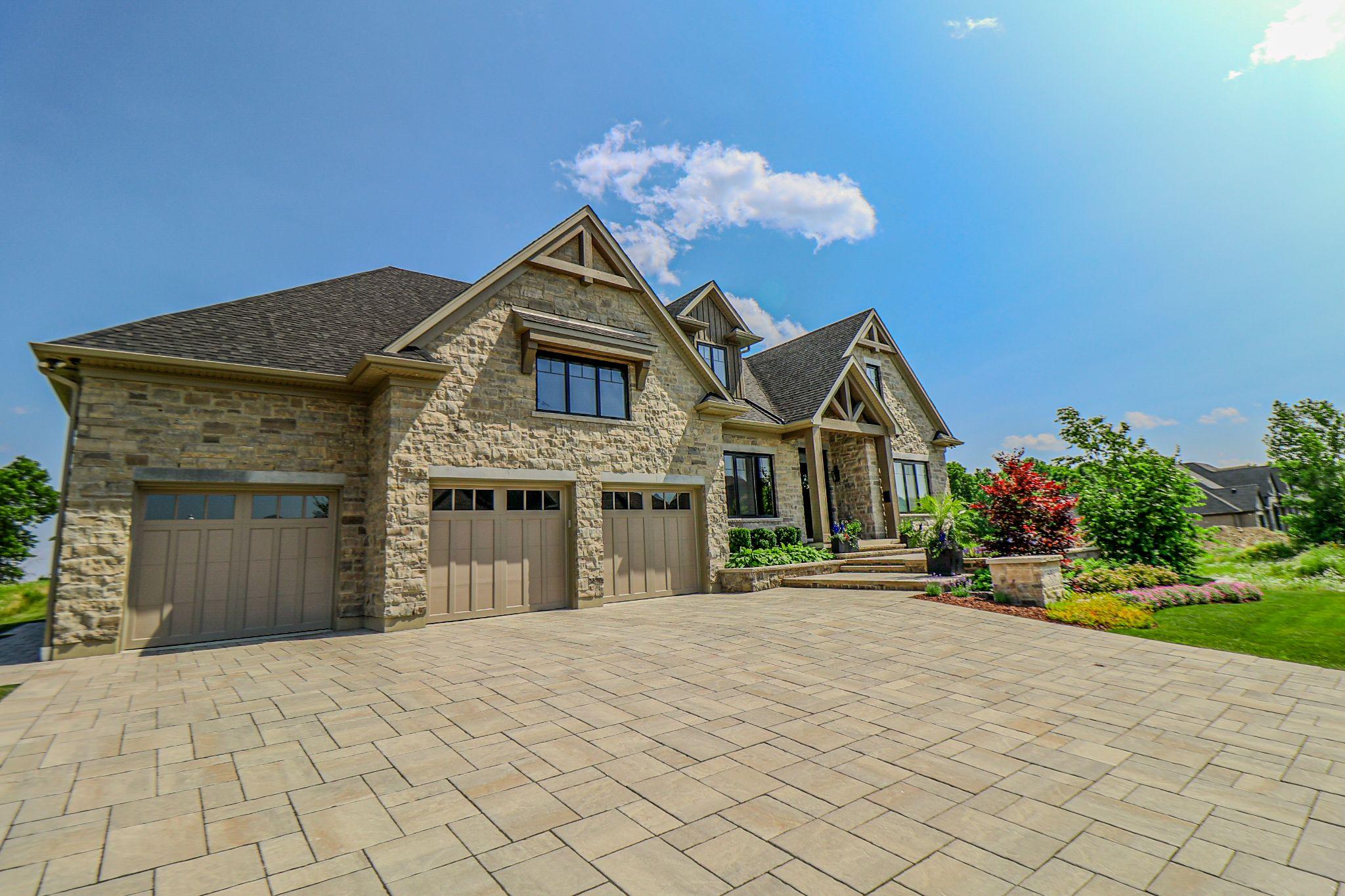
If your project changes the width of your driveway, the city gets involved. Width is almost always the reason a permit is needed.
Widening a driveway in Kitchener
Does your plan make the driveway wider where it meets the street? Or does it add a new opening? If so, part of that work happens on city land. Kitchener requires a permit for this. Here are the rules:
- You must apply at least 15 business days before you start. This is the city’s own timeline. It does not include your installer’s schedule — plan for both.
- According to the City of Kitchener, in 2026, the permit fee is $400. You get $249 back. So the real cost is $151. If you live on a regional road, add $100. You’ll also need permits from the Region of Waterloo.
- Stay away from street fixtures. Keep at least 1 meter from hydrants, streetlights, poles, and guy wires. Keep at least 2 meters from a community mailbox.
- If a city tree is in the way, you cannot widen the driveway at all.
Here’s the part that surprises people: your new driveway section must match the material that’s already there. If it doesn’t match, the city will make you resurface the entire driveway in one material. This means you usually can’t just add a strip of interlock next to existing asphalt. You have two choices: match the asphalt, or redo the whole driveway in interlock, from the garage to the street. A small widening can turn into a decision about your whole driveway. It’s better to know this before you get a quote, not after you pay a deposit.
There’s no citywide limit on driveway width. This surprises a lot of people. Instead, width depends on your zoning, your home type, whether you have a garage, and where you live in the city. Call Kitchener Planning at 519-741-2426 to confirm your limit before you finalize your design.
We take permitting into account for interlock projects in Kitchener. Any quoted designs will always be permit-friendly, and we won’t start until the correct permitting is in place.
Apply for a driveway widening permit in Kitchener here.
Patios, walls and the rest of the region
The paving itself is usually simple. In Kitchener, you typically don’t need a permit to install an interlock driveway or a ground-level patio. But some retaining walls need a permit. A large wall also needs an engineer’s plans. If your project makes the driveway bigger, or adds more hard surface to your property, you may need permission for that too.
The same permit rules apply in Waterloo and Cambridge. However, each municipality has its own permitting rules and regulations.
Treat this guide as a starting point, not a final answer. Every city sets its own fees, forms, and timelines. All the numbers above are for Kitchener only. Always confirm details with your contractor and your local city office.
The months you can lay interlock in Ontario
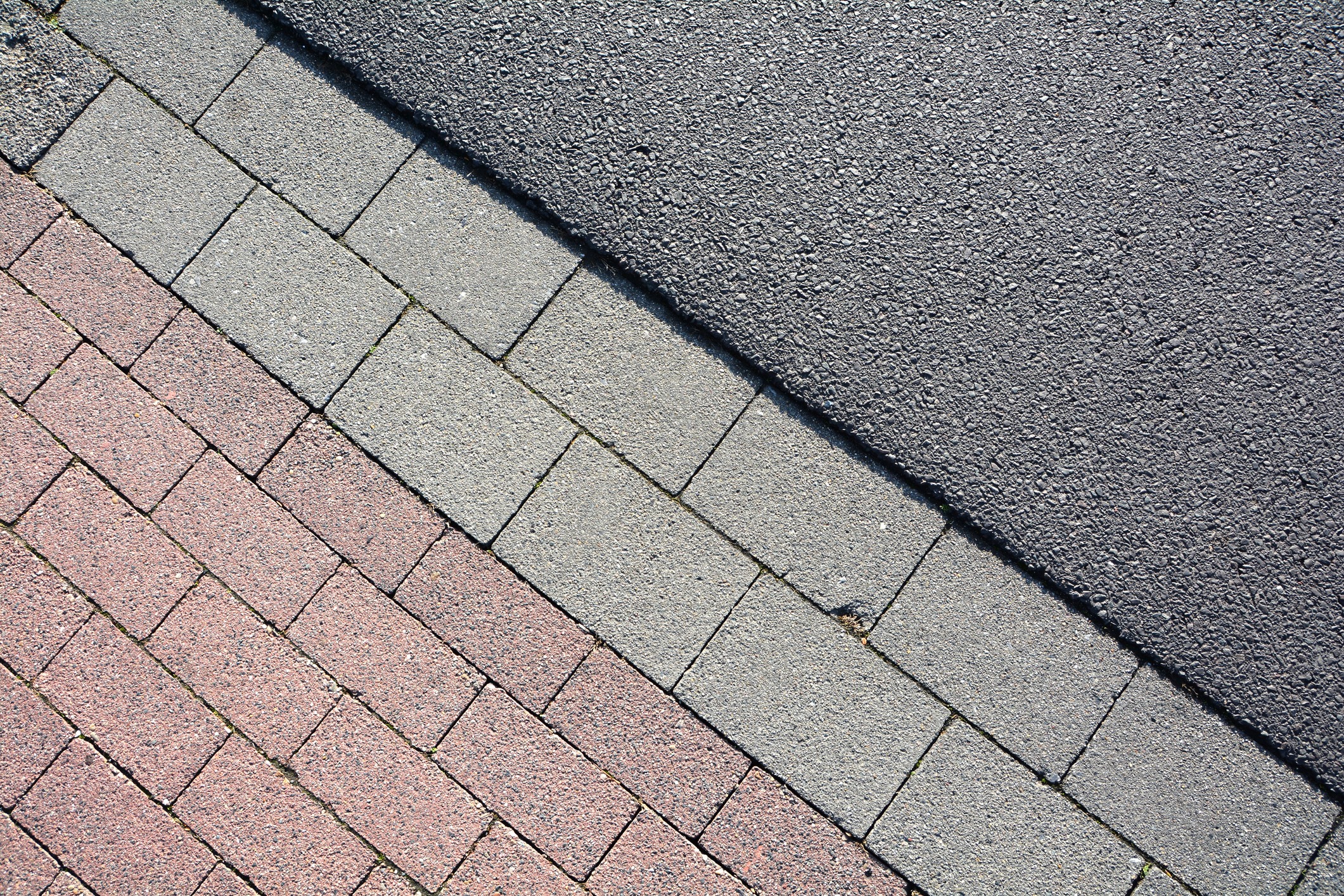
Pavers need warm ground to be laid right. The ground temperature must stay above 0°C. Below about 10°C, the material takes longer to set, and the work suffers.
Cold weather often ruins the sand used between the pavers. This sand can wash out or fail to harden. You usually don’t notice the problem until spring.
Frozen ground causes other issues, too. It affects digging and it affects how the surface settles later.
There are also hard rules in the industry. You cannot place base material or bedding on frozen ground. You cannot use frozen or wet sand. Ever.
Put this all together, and in our climate, you can’t install interlock roughly from December through March. If the ground can’t stay above freezing for the base, bedding, and joints, the job has to wait. A heater does not fix this.
Fall works fine, as long as the temperature stays above freezing. Crews usually stay busy right up until that changes.
One thing does change with a late-season install: sealing. A new surface needs 60 to 90 days before you can seal it. Our own rule adds more time: wait until after the first winter. After that, you only need to reseal every few years, not every year.
How to tell interlock installers apart
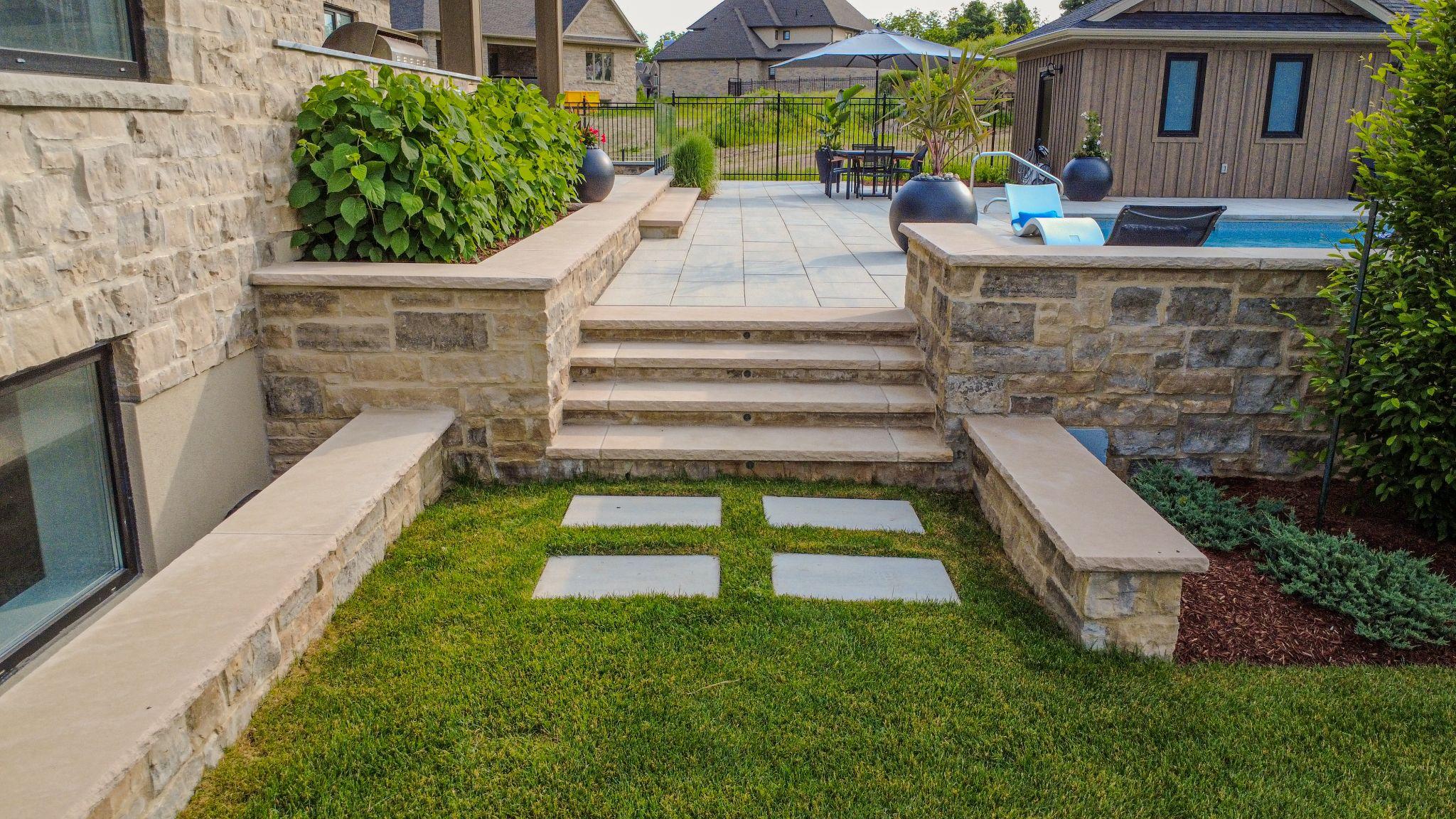
After you get three quotes, the pavers themselves start to sound the same. The real differences show up in the scope of work, the crew doing the job, and what happens after you pay.
What a written scope should name
Get the build details in writing. Ask for these specific things:
- The exact base material and bedding material. Not just “granular” or “sand” — the specific type.
- The edge restraint, and where it goes.
- What material fills the joints?
- Who calls in the utility locates?
- What site cleanup includes, including where the dug-up material goes.
If a company won’t put these details in writing, their quote isn’t cheaper. It’s just less clear about what you’re paying for.
Credentials and crews
The Concrete, Masonry and Hardscapes Association (CMHA) offers a Certified Concrete Paver Installer credential. You can check their public list to verify a company. This is a real, useful signal. But many skilled crews in this area don’t have it, so use it as one factor, not a strict pass-or-fail test.
Also ask who will actually work on your property. Our crews are our own employees. Our own foremen and project managers run each job, so we can answer questions about your project right away, without calling someone else first. Subcontracted crews aren’t automatically worse. But it does affect who’s responsible if something needs fixing later, so it’s worth asking before you sign. This question matters a lot when picking any landscape company.
Ask about the ground, too. What have they built in Kitchener-Waterloo? What makes them decide a project needs extra work beyond their standard build? A good answer will mention soil, drainage, and access. In other words, all the things that make your property unique. If a company gives the same build to every property no matter what they find on site, their site visit isn’t accomplishing much.
The warranty question
Our warranty covers two years on all workmanship, as long as you keep up proper maintenance. It does not cover natural changes in the material, like staining, discoloring, small white mineral deposits, cracking, or shape changes — these happen naturally to stone and concrete over time. It also doesn’t cover damage from de-icing salt or other products applied to the stone or concrete.
That’s how our warranty works. Ask any installer for theirs in writing. Ask specifically how they handle a settled section, both during and after the warranty period — a small amount of settling is normal for this type of pavement.
If you’d rather start by looking at your own property than a price list, walk your driveway or backyard with us. We build interlock driveways and entrances across Kitchener, Waterloo, Guelph, and Cambridge, and the ground on your lot shapes most of the design.
Request a consultation and we’ll start there.
Tags: